Showing posts with label wakayama. Show all posts

Tuesday, August 22, 2017

MINAKATA Kumagusu lived in Tanabe

MINAKATA Kumagusu (1867-1941), known for his research in diversified fields including the study on Myxomycete lived in tanabe city, wakayama, for his last 25 years. His archives and the restored house where he lived while in tanabe is now open to the public. The cozy air conditioned Archives is free of charge with lots of interesting books and free use of PCs which are always connected to the internet. 

The house where he lived and pursued research is restored and accessible with a small fee. It's on the premises of the Archives. You will see a large backyard where trees grow, an ideal environment for his study. This is where he found a number of Myxomycete.It's interesting to see both his rooms and the trees he saw.

On the wall of a building in tanabe, the portrait of Kumagusu can be seen. It's originally a painting done by my grandfather who graduated from the most prestigious art school in Japan. It's in Ueno, Tokyo and still a very good school. 

The MINAKATA KUMAGUSU museum stands on the rocky hill in shirahama, located next to tanabe. This one was recently renovated and English captions on displayed panels are available and a good place to find out who he was.

Before anybody in Japan thought about ecology or when anybody else didn't even know the word, ecology, Kumagusu was already conscious of it. Thanks to him, many small shrines AND their forests survived. They were about to be destroyed due to a stupid national policy only focusing on short-sighted modernism and economy. The shrine premises showed exquisite ecological systems which Kumagusu knew had to be protected. Nobody else knew but him.

his portrait on a building wall

cozy archives, five minutes away on foot from my mom's home

the room where Kumagusu wrote articles

sendan or Japanese bead tree in the backyard

his storage

Kumagusu Museum on the cliff

the roof of the Kumagusu Museum 

directions to the three sacred shrines in Kumano
Kumagusu made a thorough research on Kumano 
from various aspects, from viewpoints of 
folklore, biology, natural history, and mythology

net-kin or myxomycete pic at a poster session
of an international conference 
on net-kin held in tanabe

poster session held in the lobby of the city library
oral sessions were on the second floor 
only for the members

DORO-KYO gorge is easy and fun

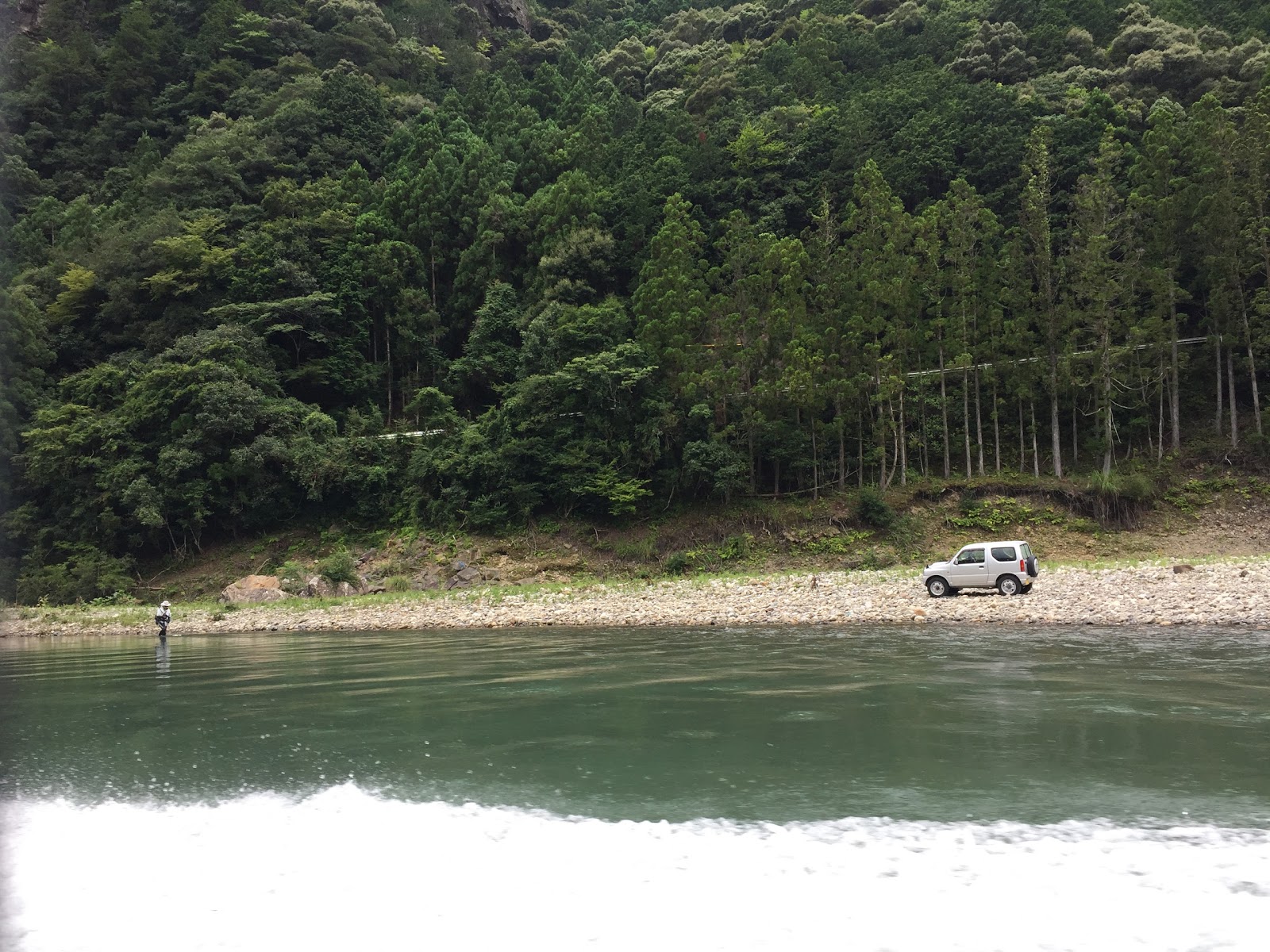
While on a boat, you are sometimes on the borders of three prefectures: Wakayama, Nara, and Mi-e.
Changing views are refreshing to your mind and eyes. It's a two-hour cruise trip worth trying. It costs about 3500 yen an adult (a bit cheaper with a discount coupon available on the net) but you won't regret paying that much.


Doro hotel cafe on the cliff; no longer a hotel  but a cafe

looking back

fishermen catching sweetfish

the roof opens later on the cruise

Monday, January 9, 2017

Fantastic new elementary school in a small town

One of the major industries in this community was forestry and lumber. It still is but reduced in scale. 
But residents who form a support group for their community helped this woody school to be built. One major forestry and lumber company donated wood itself. It is now complete and waiting for the kids to come. Small people should be surrounded with an appropriate environment and grow in good health.

 Second floor

 Wood all the way down 

 Classroom

 These poles are all solid.

 Janitor's room sign


Saturday, January 7, 2017

Misty TAKAHARA on the KUMANO KODO pilgrimage route

 
View from TAKAHARA 

In July of 2004 the three sacred sites of Koyasan, Yoshino & Omine, and the Kumano Sanzan (the Three Grand Shrines of Kumano) along with the Kumano Kodo pilgrimage routes that connect them, were registered on the UNESCO World Cultural Heritage list as the "Sacred Sites and Pilgrimage Routes in the Kii Mountain Range". Obscure KUMANO came to be known to the world this way.

The Kumano Sankeimichi, locally known as the Kumano Kodo, is a network of ancient pilgrimage routes across the Kii Peninsula and an integral part of this World Heritage site. 

One of the Kumano Kodo pilgrimage routes was the Nakahechi route.

Starting in the 10th century, the Nakahechi route was extensively used by the imperial family, particularly retired emperors, on pilgrimage from Kyoto. With them came lots of aristocrats. This route came to be recognized as the official pilgrimage route. From the 11th to 13th, the nobles took this route and repeated their visits more than 100 times in total.

Oji subsidiary shrines of the Kumano deity lined the route. Many still remain but others are only in ruins. But you will feel the vibration from the past.
In addition to these small shrines, local shrines or temples stand along the pilgrimage route. They can be good destinations for your walk and spice up your trekking.

Pics here are from the TAKAHARA district on the hill in Nakahechi. TAKAHARA is nicknamed 'misty mountain village' because of its foggy climate. There stands the old shrine TAKAHARA KUMANO SHRINE.

Many start their Nakaheji route walk at Takijiri-oji. It will take two hours from Takijiri to the shrine on the hill.

 
     TAKAHARA KUMANO shrine close-up

 Guardian animals and its butt

 Camphor trees sour on the grounds of the shrine

 You can dine or stay here

      And the room with two beds and a great view

 KUMANO kodo sign